The Wachau Valley, Melk to Krems
Apricot terraces and a castle-topped bend of the Danube, done as a loop: train out, abbey, boat downstream, train home.
The short version
- The classic loop: train to Melk, tour the abbey, board the boat downstream to Dürnstein or Krems, train back to Vienna.
- ÖBB sells a combi ticket bundling the train legs, the boat, and abbey entry as one fare — the simplest version of the day.
- Melk Abbey’s library, church, and terrace take about 90 minutes; details at stiftmelk.at. The boat dock is a 15-minute walk below the town.
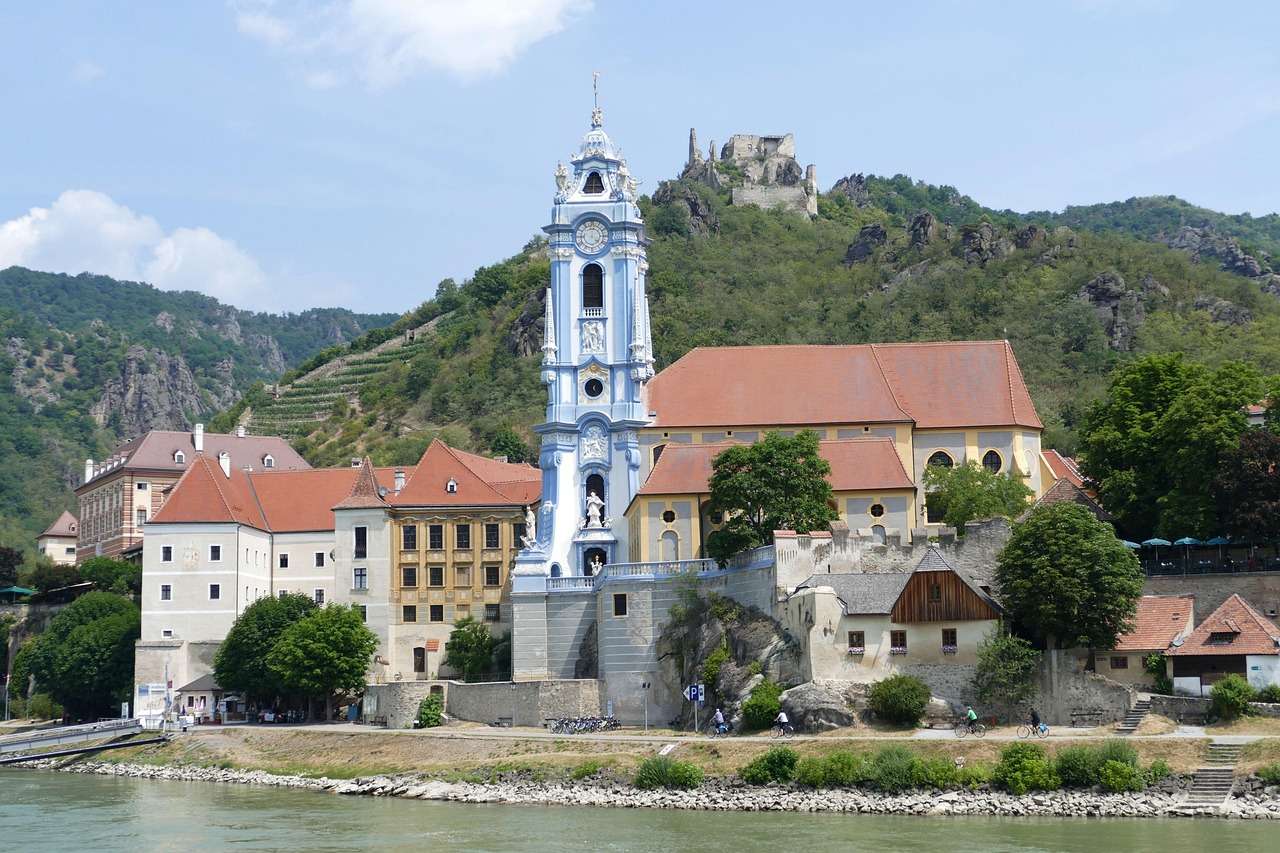
- Hop off at Dürnstein: the blue tower, the lanes, and the 45-minute climb to the castle ruin where Richard the Lionheart was held.
- Wachau apricots: schnapps and jam all year, and in high summer the fruit itself, sold from stands along the river.
- Downstream sailings are much faster than upstream ones — ride the current and let the trains do the rest. Boat times at ddsg-blue-danube.at.

Getting there
Trains from Vienna reach Melk in about an hour. From there the day flows downstream: abbey first, then the boat along the prettiest stretch of the Danube — terraced vineyards, ruined castles, riverside villages — getting off at Dürnstein or riding through to Krems, where trains run back to Vienna into the evening. The ÖBB combi ticket sells the whole loop as one fare; the boat schedule at ddsg-blue-danube.at sets which date works.
The day
Give Melk Abbey 90 minutes — the library and the view from the terrace are the substance behind the gold. Walk down to the dock with margin, then let the river do an hour and a half of the sightseeing. Dürnstein is worth a two-hour stop: the lanes, a glass of local Grüner Veltliner, and the castle-ruin climb if the legs are willing. Finish in Krems for the train, or stay on the boat and skip the climb. Wine taverns along the valley pour the reason the terraces exist.
When to go
Boats run roughly April to October, and the valley peaks twice: spring blossom on the apricot terraces, and the autumn harvest weeks when the heurigen taverns open their yards. July and August add river traffic and heat. In winter the boats stop and the loop becomes a train-only trip — a different, quieter valley.
Frequently Asked Questions
Can I do the Wachau without the boat?
Yes — trains and buses serve both banks year-round. But in season the boat is the point; the valley is built to be seen from the water.
Dürnstein or Krems for the stopover?
Dürnstein for the postcard hour and the castle climb; Krems for the bigger town and easier train connections. The boat lets you do Dürnstein and continue to Krems after.
Is Melk Abbey worth the entry?
Yes — the library and the terrace over the Danube justify the visit even for the church-weary.
How long is the whole day?
Ten to eleven hours door to door from Vienna, six or seven of them in the valley. It is a full day that never feels rushed if the boat times are respected.
Can I bring a bike?
The Danube cycle path runs the whole valley and rentals exist in Melk and Krems; the boats carry bikes. Riding one leg and sailing the other is a fine version of the loop.