Vienna Day Tours
I’m Serious Day Tour Man AI, your day trip expert. Ask me anything — where to go, how to get there, and what’s actually worth your day.
Vienna’s best day trip is a valley you can buy in one ticket: the Wachau’s train-boat-abbey combination puts a Baroque library, Richard the Lionheart’s prison hill, and two hours of terraced Danube into a single fare. Another European capital sits an hour away — the world’s two closest capital pairs, with a boat option — and the day everyone asks about, Hallstatt, gets the honest verdict its seven transit hours have earned.
The city block covers Schönbrunn’s timed reality, the State Opera’s standing-room secret, and the coffeehouse rules that make the city make sense.
Here’s what’s worth a day, with real times and honest trade-offs.
Popular Day Trips
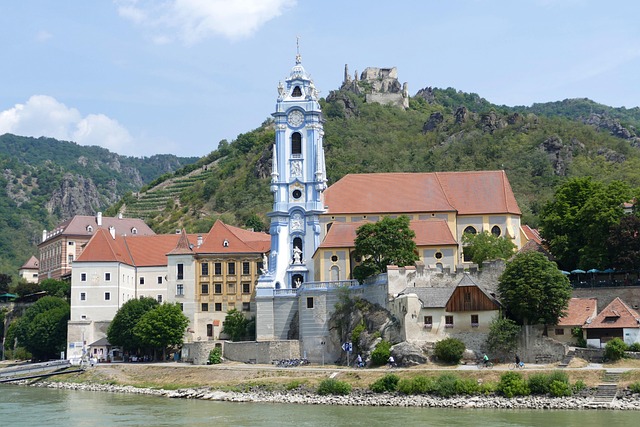
The Wachau
Apricot terraces and a castle-topped bend of the Danube

Bratislava
Two capitals an hour apart — the closest pair in Europe

Hallstatt
The postcard lake village, 3.5 to 4 hours each way
The Wachau — Melk, the Boat & Dürnstein
An hour west, the Wachau runs Austria’s most efficient masterpiece day, and the mechanics come pre-packaged: the ÖBB Wachau combination ticket bundles the train to Melk, the Danube boat through the valley, Melk Abbey’s admission, and the train home from Krems — one fare, break-of-journey at Dürnstein allowed, and the arithmetic beats buying the parts.
Melk Abbey first: the Benedictine statement piece on its rock over the river — the marble hall, the library’s 100,000 volumes under fresco (the spiral staircase everyone photographs), and the church’s gold delirium — with the terrace reading the valley you’re about to sail. Then the boat: DDSG’s ships run the Melk–Krems stretch up to four times daily in season (roughly late March through October), and the two hours downstream pass Schönbühel’s castle, Aggstein’s ruin, and the apricot-orchard terraces that made the valley UNESCO. Hop off at Dürnstein: the blue baroque tower, the lanes, and the climb to the castle ruin where Richard the Lionheart sat imprisoned until his troubadour found him — the legend improves the view, and the view needs no help. The last leg reaches Krems by boat or bus, and the train runs home.
Three rules apply: check the boat timetable against the abbey tour first (the connections are comfortable, not generous), apricot season (July) and harvest add the valley’s flavors, and a Heuriger wine-tavern stop in Dürnstein or Krems is the correct ending. Full day, engineered, and the best-value classic in eastern Austria.
Read the full Wachau Valley day-trip page.
Bratislava — The Capital Next Door
An hour east by train (or, in season, the Twin City Liner catamaran down the Danube — the arrival by river is the stylish version), Bratislava is the closest foreign capital to any capital in the world, and the day trip is a genuine two-country lunch run: carry your ID for the Schengen formality and go.
The circuit: the reconstructed castle on its hill reads both countries and, on clear days, three; the old town below runs compact and cheerful — Michael’s Gate’s tower, the main square’s ensemble, and the bronze statues (Čumil the sewer-watcher is the mandatory photograph) planted as jokes that became landmarks. The blue Church of St. Elizabeth, ten minutes east, is the art-nouveau confection no one expects; the UFO observation deck on the SNP bridge supplies the communist-futurist counterpoint and the river panorama.
The eating layer: bryndzové halušky — the sheep-cheese dumplings that are the national dish — with a Zlatý Bažant or a Slovak white, at prices that remind you Vienna is an outlier; the Danubiana art museum downstream extends the day for the gallery-inclined. The old town is a half day at strolling pace, the castle and blue church stretch it, and the boat-one-way, train-back combination makes the transit part of the trip. Two capitals before dinner remains an excellent sentence to say out loud.
Read the full Bratislava day-trip page.
The Hallstatt Question — A Verdict
Hallstatt sells relentlessly from Vienna, so the numbers come first: the village sits three to three and a half hours away by any route — the rail version ends with a ferry across the lake, which is the best arrival in Austria — and the day-trip format spends seven transit hours on a village of roughly 750 residents that receives up to ten thousand visitors on peak days. The pastel lakefront, the swans, the salt-mine funicular and skywalk, the bone house’s painted skulls: all real, all lovely, all shared with the crowd that arrived on your schedule.
The verdict: from Vienna, Hallstatt is a marginal day trip and a wonderful overnight — the village at 7 a.m. and 8 p.m., when the coaches are gone, is the place the photographs promise, and the Salzkammergut around it (the Dachstein ice caves and Five Fingers platform above, Gosausee’s mirror lake) fills the second day. Travelers based in Salzburg get the same village at half the transit. Day-trippers going regardless: take the earliest train, use the ferry arrival, climb to the skywalk before noon, and extend respect to a village that has asked the world, politely and repeatedly, to behave in its lanes — this is a living town, not a set.
The alternative answered honestly: the Wachau above delivers Austria’s river-and-village register at one-third the distance, and the Semmering below delivers the Alps by rail. Hallstatt suits the trip designed around it; it punishes the sprint.
The Semmering Railway — The Alps by Engineering
An hour and a half southwest, the Semmering Railway is the day trip for anyone who thinks the journey-not-the-destination line is a cliché: the 1854 line over the Semmering Pass — the world’s first true mountain railway, UNESCO-listed as a whole — climbs its viaducts and tunnels through limestone scenery the engineers framed deliberately, and riding it in a regular ÖBB train costs regular ÖBB fare. Sit on the right heading south, and the Kalte Rinne viaduct’s double-decker arc delivers the line’s signature moment.
The destination options: Semmering village itself — the belle-époque resort where Vienna’s fin-de-siècle set took its air, with the Bahnwanderweg railway-panorama trail walking the line’s best viewpoints from above (the 20-Schilling-Blick recreates the banknote’s view, and the name explains the nation) — or continue to Mürzzuschlag’s winter-sport museum and the Styrian side. Winter converts Semmering into Vienna’s closest ski hill; summer runs the wanderweg’s gentle hours.
The frame: this is the low-cost, high-scenery day — rail out, panorama walk, Kaiserschmarrn at a mountain inn, rail home — and the honest pick for travelers who want Alps without committing to the western distances. The Raxseilbahn cable car, one valley over, adds the plateau version for the ambitious.
Baden & the Vienna Woods — The Gentle South
Thirty minutes south (the Badner Bahn tram runs there directly from the Opera, which is its own charm), Baden bei Wien is the spa town the Habsburgs and Beethoven shared: the UNESCO “Great Spa Towns” listing covers the Biedermeier center, the Kurpark’s operetta bandstand summers, and the sulfur springs that still fill the Römertherme’s pools — the casino and the rose garden (30,000 bushes at June peak) complete the promenade set. Beethoven’s summer lodgings — where much of the Ninth took shape — run as a small museum for the pilgrims.
The woods around it hold the day’s second act: Mayerling, the hunting lodge where Crown Prince Rudolf’s 1889 murder-suicide broke the empire’s line — now a Carmelite convent with a small, soberly told exhibition, visited with the restraint the story asks — and Heiligenkreuz Abbey, the living Cistercian house whose medieval cloister and chanting monks (the Vespers hours are public) supply the region’s deepest quiet. The Seegrotte at Hinterbrühl adds Europe’s largest underground lake, boated through old gypsum workings.
The frame: tram out, spa-or-park morning, woods afternoon by bus or car — the region’s gentlest full day, and the correct recovery after the city’s museum miles. A Heuriger evening in Gumpoldskirchen on the way home finishes it in the local key.
The Schönbrunn Slots, the Opera Secret & Vienna Itself
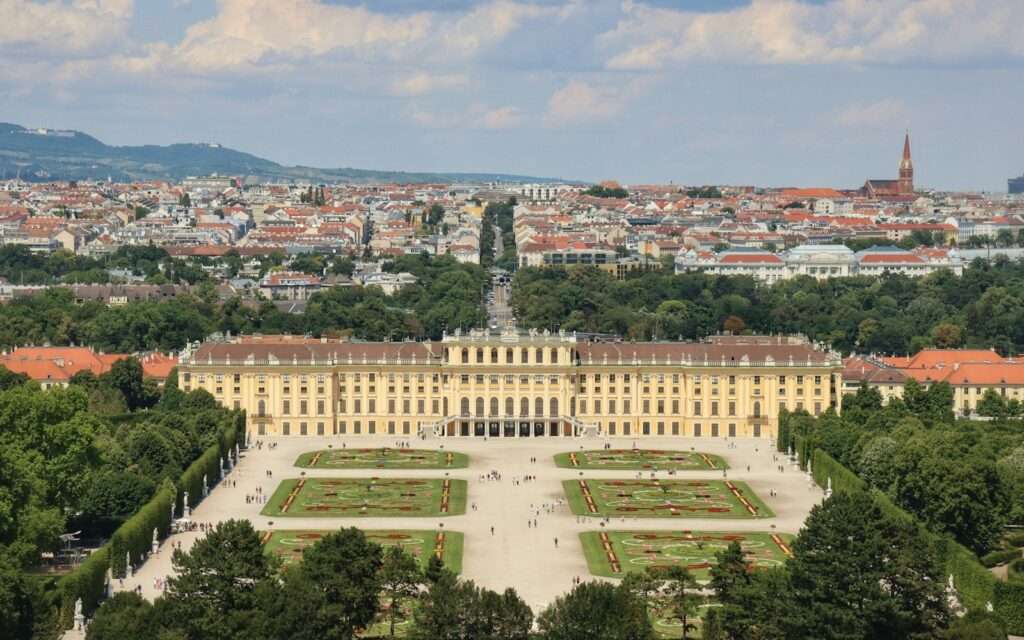
Schönbrunn, mechanically: the palace runs timed entry — book the slot online, choose the Grand Tour over the Imperial for the rooms that justify the trip, and go at opening or late afternoon; the gardens are free and open early, so the Gloriette climb and the maze can bracket any slot. The zoo (the world’s oldest, and better than it needs to be) turns the palace into a family day. The Hofburg’s counterpart: the Sisi Museum’s honest melancholy, the imperial apartments, and the Spanish Riding School’s morning exercises — the cheaper, quieter way to see the Lipizzaners work.
The Opera secret, stated plainly: the State Opera sells standing-room tickets for a few euros — released online and at the dedicated box office shortly before each performance — which puts world-class opera under the chandeliers for the price of a coffee; arrive early, claim your rail spot with the traditional scarf, and dress like you meant to be there. The Musikverein and Konzerthaus run their own cheap-standing traditions for the orchestral version.
The living city: coffeehouse rules — one coffee buys the table for the afternoon, the newspapers on rods are for everyone, the waiter’s formality is the service, not its absence — with the melange-and-Sachertorte question settled at Café Central or Sperl by conviction; the Naschmarkt’s stalls-and-brunch sprawl (flea market Saturdays); and the sausage-stand Käsekrainer at midnight as the counterweight institution. The Prater truth: the Riesenrad’s slow wheel lives up to its Third Man fame at dusk, and the rest of the park is a cheerful funfair, taken as such. Season math: April–June and September–October are the windows; summer brings the free film festival to Rathausplatz; the ball season (January–February) and Christmas markets (from mid-November) are the city’s own seasons, dressed for; and Sunday closes the shops but opens the museums, which is the correct trade.
Frequently Asked Questions
What’s the Wachau combination ticket?
The ÖBB combi covering train to Melk, the abbey’s admission, the DDSG boat through the valley, and the return from Krems — one fare, with a Dürnstein stopover allowed. Check boat times against your abbey visit; the season runs roughly late March through October.
Is Hallstatt worth it as a day trip from Vienna?
Marginally — seven transit hours for a village at peak density. It is best as an overnight (the 7 a.m. lakefront is the postcard) or a Salzburg base at half the distance; the Wachau delivers the river-village register a third as far. If going, take the earliest train and the ferry arrival.
Do you need a passport for Bratislava?
Carry ID — the Schengen crossing is a formality. Train in an hour or the seasonal catamaran down the Danube; castle, old town, the blue church, and halušky at Slovak prices make the two-capitals day.
How do Vienna Opera standing tickets work?
A few euros each, released online and at the dedicated box office shortly before performances — arrive early, mark your rail spot with a scarf per tradition, and you’re at the State Opera for coffee money. The Musikverein runs the same trick for concerts.
What are the rules at Schönbrunn?
Timed entry, booked online — take the Grand Tour option, bracket your slot with the free gardens (the Gloriette view costs only the climb), and go at opening or late afternoon. The zoo converts it into a full family day.