Brno and Villa Tugendhat
The Czech Republic’s second city, ninety minutes north — functionalist glass, baroque bones, and a beer culture that never needed Prague’s approval.
The short version
- Direct trains and buses run Vienna–Brno in about an hour and a half — RegioJet’s cheap, comfortable services lead the route; book at regiojet.com.
- Villa Tugendhat — Mies van der Rohe’s 1930 glass masterwork and a UNESCO site — is the city’s crown, and interior tours sell out months ahead: reserve at tugendhat.eu the moment your date is fixed, or settle for the garden view.
- Under St James’ church lies Europe’s second-largest ossuary by most reckonings: the bones of some 50,000 people, rediscovered in 2001 and opened with sober lighting and Baroque painted coffins.
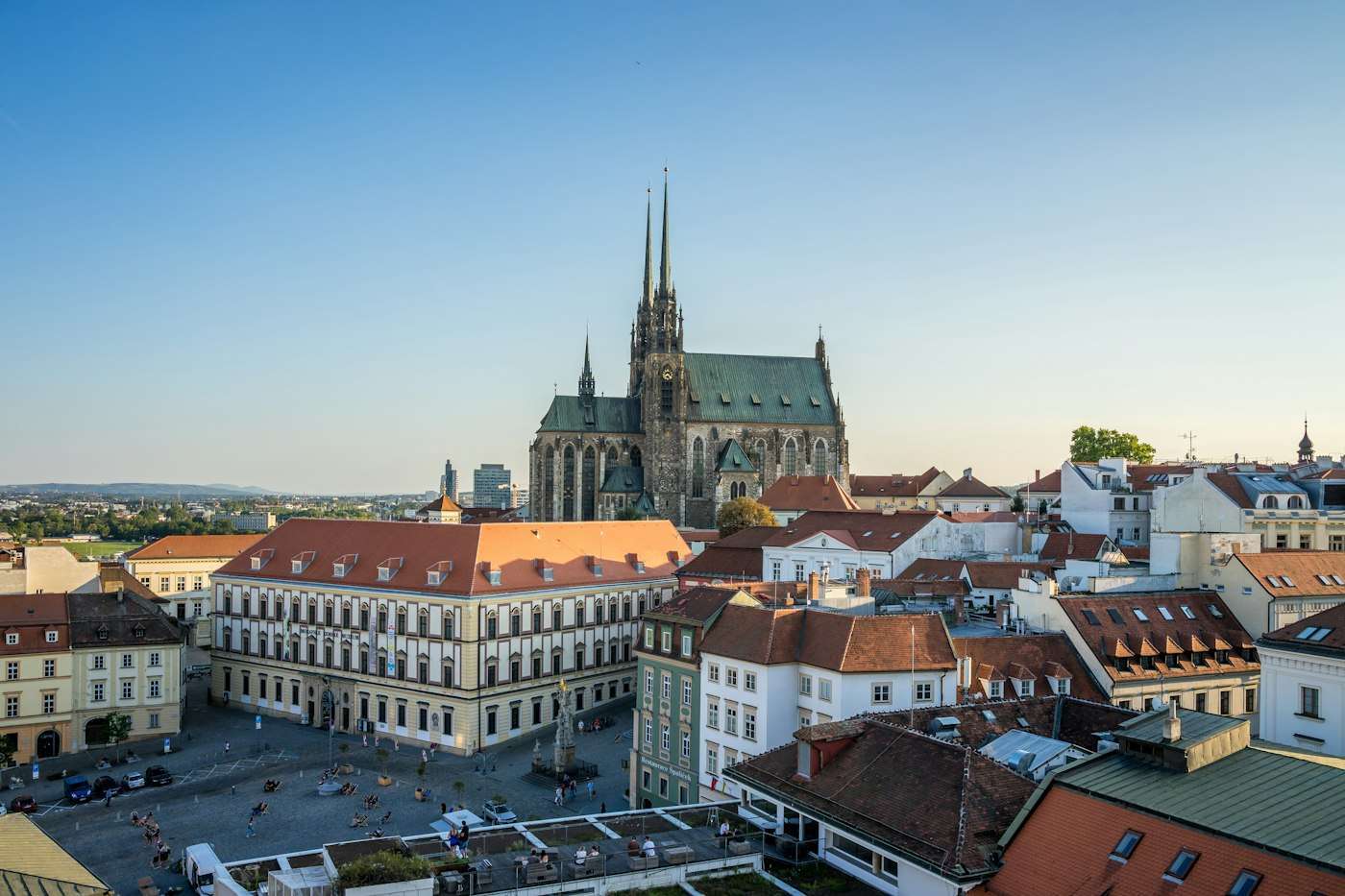
- Špilberk castle — fortress, Habsburg prison, now the city museum — watches from its hill, and the cathedral of St Peter and Paul rings noon at eleven, a habit kept since a 1645 siege trick supposedly saved the city.
- The old town runs on details: the astronomical clock that dispenses a glass marble at 11:00 daily, the Zelný trh vegetable market with its cabbage-scented centuries, and beer halls pouring Moravian lager that argues with Prague by existing.
Getting there
RegioJet and ÖBB trains leave Wien Hauptbahnhof for Brno roughly hourly, taking about an hour and a half; RegioJet’s fares start at a few euros with coffee included, and buses from Südtiroler Platz match the timing for less. Brno’s main station sits at the old town’s edge — everything central is walkable, with trams for the villa (a short ride northeast) and the exhibition grounds. The border crossing is invisible; bring your passport anyway, and koruna or a card for the city.
The day
If you hold a Tugendhat slot, the day bends around it: the villa sits fifteen tram minutes from the centre, and the tour — onyx wall, chrome cruciform columns, the glass wall that sinks into the floor — remains the most complete statement of how the twentieth century wanted to live. Fit the centre around your slot: Zelný trh’s market stalls under the Parnas fountain, the astronomical clock’s 11:00 marble ceremony (bring patience and cupped hands), and the climb through the cathedral quarter, where Petrov’s spires ring noon an hour early because a 1645 bell-ringer allegedly ended a Swedish siege by cheating the clock. The St James ossuary asks for quiet: three chambers of stacked remains from plague and war centuries, presented with restraint. Špilberk’s casemates — the Habsburgs’ dreaded political prison — and the city museum fill the later afternoon, and the beer halls off Jakubské square finish the argument that Moravia pours better than Bohemia. The evening train home is ninety minutes; the marble in your pocket rides free.
When to go
Year-round — Brno is a working student city, not a season. Villa slots, not weather, set the calendar: book and obey. Summer terraces fill Zelný trh, October fills the beer halls, December lights a Christmas market across three squares, and January gives you the ossuary and casemates in fitting temperatures. Weekdays beat weekends for villa availability and tram elbow room alike.
Frequently Asked Questions
How do you get from Vienna to Brno?
Direct trains from Wien Hauptbahnhof, roughly hourly, about 90 minutes — RegioJet runs the cheapest comfortable service — plus frequent buses. Brno’s station borders the old town.
How far ahead must you book Villa Tugendhat?
Months, for interior tours — capacity is tiny and English slots go first. Book at tugendhat.eu as soon as your date exists; a cheaper garden ticket covers the exterior view without reservation stress.
What is the ossuary like?
Three underground chambers holding the remains of around 50,000 people — plague, war, and overflowing parish cemeteries — rediscovered in 2001 beneath St James’ church and opened with subdued lighting and music. It is presented respectfully and takes about half an hour.
Why do the cathedral bells ring noon at eleven?
By cherished legend, during the 1645 Swedish siege the attackers vowed to quit if the city didn’t fall by noon — so a quick-thinking ringer struck twelve at eleven, and the Swedes packed up. Brno has rung noon early ever since, and the astronomical clock fires its daily marble at the same hour.
Is Brno worth it versus Prague?
Different propositions: Prague puts on a show; Brno lives its life. You come here for Mies van der Rohe’s villa, functionalist streets, Moravian beer, and a Czech city where the crowds are students, not tour groups. As a Vienna day trip it is the closest Czech answer available — and the right one.